Why Every Type of Trader Needs Ledger-Based XIRR (Yes, Even F&O Traders)
Whether you're a long-term investor, swing trader, or F&O trader—everything flows through your ledger. Here's why XIRR is the only metric that matters.
Ask a long-term investor how their portfolio is performing, and they'll probably tell you their absolute returns or maybe even their XIRR. But ask an F&O trader or a swing trader the same question, and you'll often get answers like "I made ₹50,000 last month" or "I'm up 15% this quarter."
Here's the problem: None of these answers tell you if you're actually making money.
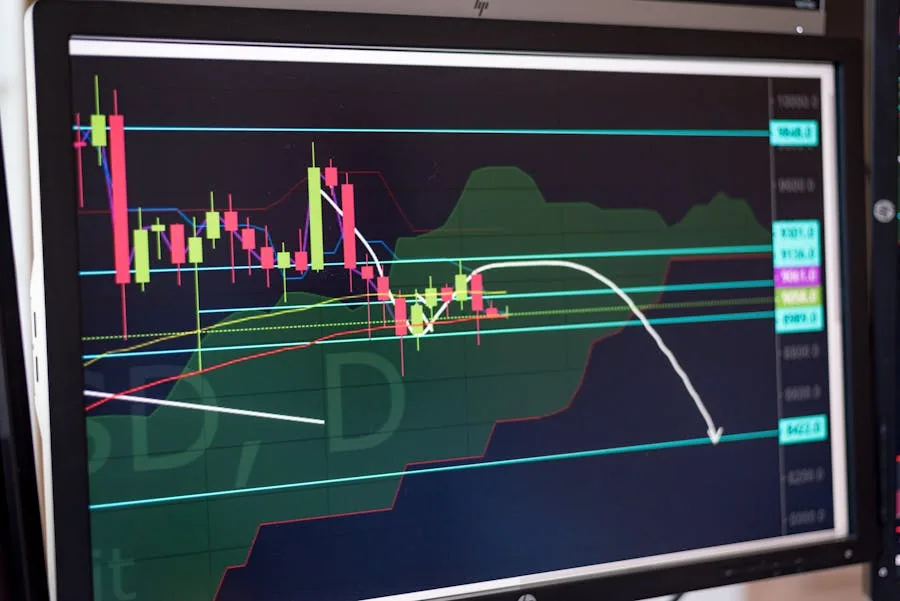
Quick Answer: XIRR is the only metric that reveals true trading performance because it converts all cash flows — deposits, withdrawals, profit bookings, and charges — into a single annualized return rate that accounts for both the amount and the timing of each rupee. Whether you're a day trader, swing trader, F&O trader, or long-term investor, everything ultimately flows through your broker's ledger, making ledger-based XIRR the universal measure that works across all trading styles. Without it, figures like "₹50K profit last month" or "up 15% this quarter" are incomplete — they tell you nothing about your actual annualized return or whether the risk and effort were justified against a simple index fund.
The Universal Truth: Everything Ends Up in Your Ledger
It doesn't matter what kind of trader you are:
- Day trader executing 10 trades daily
- Swing trader holding positions for weeks
- Long-term investor buying and holding for years
- Options trader making money from premiums
- Equity + F&O hybrid trader
- ETF accumulator
Every single rupee you earn (or lose) ends up in one place: your broker's ledger.
And that's exactly why XIRR calculated from your ledger is the only metric that shows your true performance.
Why Traditional Metrics Fail for Active Traders
For F&O Traders: "I Made ₹50K Last Month" Means Nothing
Let's say you're an options trader:
- You started with ₹2,00,000 in January
- Made ₹50,000 in February
- Lost ₹30,000 in March
- Made ₹40,000 in April
- Added another ₹1,00,000 in May
- Made ₹60,000 by June
So, are you doing well?
Without XIRR, you have no idea.
- You made ₹1,20,000 in profits, but you added capital midway
- What's your annualized return?
- Are you beating a simple index fund?
- Is your risk justified by your returns?
Your ledger knows all of this. Every deposit, every withdrawal, every profit, every loss—it's all there. XIRR turns this mess of numbers into one clear answer: Your annualized return rate.
For Swing Traders: "I'm Up 15% This Quarter" Is Incomplete
Swing traders often track returns per trade or per month. But here's what this doesn't show:
-
Capital sitting idle between trades
- You close a profitable trade and wait 2 weeks for the next setup
- That capital is earning 0% during the wait
- Your "15% quarterly return" doesn't account for this dead time
-
Partial withdrawals and deposits
- You withdrew ₹50,000 for an emergency in February
- Added it back in March
- Your quarterly return calculation is now meaningless without XIRR
-
Dividends and corporate actions
- You held a stock that gave dividends
- You held through a bonus issue
- Traditional calculations miss these
Your ledger captures all of this automatically.
For Long-Term Investors: "My Portfolio is Up 80%" Doesn't Tell the Whole Story
Even long-term investors get this wrong:
- You invested ₹10,000 monthly for 3 years
- Your portfolio is now worth ₹4,50,000
- Total invested: ₹3,60,000
- Absolute gain: ₹90,000 (25% total return)
But what's your annualized XIRR? Could be anywhere from 8% to 15% depending on when you made each investment.
Your ledger tracks every SIP-like deposit and calculates the time-weighted return automatically.
The One Metric That Works for Everyone
Why XIRR is Universal
XIRR doesn't care about your trading style because it only cares about one thing: cash flows and time.
- When did money enter your broker account? (Deposit)
- When did money leave your broker account? (Withdrawal)
- What's the current value of everything inside? (Portfolio value)
That's it. Three simple questions that work for:
Day Traders & Scalpers
Jan 1: Deposited ₹5,00,000
Throughout the year: 500+ trades, P&L fluctuating daily
Dec 31: Account value = ₹5,75,000
XIRR: 15%
You don't need to track every trade. Just the deposits and final value.
F&O Traders
Jan 1: ₹3,00,000
Mar 1: Withdrew ₹50,000 (partial profit booking)
Jun 1: Added ₹1,00,000 (new capital)
Sep 1: Withdrew ₹1,00,000 (profit booking)
Dec 31: Account value = ₹2,80,000
XIRR: 18.5%
All your complex P&L, deposits, withdrawals—reduced to one clear number.
Long-Term Investors
Monthly SIP of ₹20,000 for 3 years
Dec 31: Portfolio value = ₹8,50,000
Total invested: ₹7,20,000
XIRR: 12.3%
Perfect for comparing against mutual funds or index returns.
Hybrid Traders (Equity + F&O + ETF)
Multiple trades across segments
Dividends from equity holdings
Premium income from options
ETF accumulation
Regular deposits and occasional withdrawals
XIRR: Shows combined performance across all strategies
Why Your Ledger is the Source of Truth
1. It Never Lies
Your ledger is maintained by your broker, not by you. You can't "forget" to add a losing trade or "accidentally" exclude a bad month. It's an objective, third-party record.
2. It Captures Everything
- Every deposit and withdrawal
- Dividends and bonus shares
- Quarterly settlements
- Brokerage and charges
- Corporate actions
- Buyback proceeds
- Rights issue transactions
Try tracking all of this manually. Go ahead, we'll wait.
3. It Accounts for Time
F&O traders often say "I made 30% last month!" But on what capital? For how long?
If you made ₹30,000 on ₹1,00,000 in one month, that's impressive. If you made it on ₹10,00,000, that's... not as impressive.
XIRR accounts for both the amount AND the time, giving you a true annualized return.
Real Example: The Multi-Strategy Trader
Meet Rahul, who:
- Does swing trading in equity (holds 5-15 days)
- Sells options for premium income
- Holds some long-term blue-chip stocks
- Occasionally trades intraday when he sees a setup
His year looks like this:
Jan 1: Started with ₹5,00,000
Jan-Mar: Made ₹80,000 from swing trades
Feb 15: Received ₹12,000 dividend from long-term holdings
Mar 1: Withdrew ₹50,000 for personal use
Apr-Jun: Lost ₹30,000 in a bad swing trade
May 1: Added ₹1,00,000 fresh capital
Jul-Sep: Made ₹1,20,000 from options selling
Oct 1: Withdrew ₹1,00,000 to buy a car
Oct-Dec: Made ₹40,000 from mixed trades
Dec 31: Portfolio value = ₹6,00,000
What's Rahul's return? Without XIRR, it's impossible to say. With XIRR calculated from his ledger:
XIRR: 16.8%
Now Rahul can answer the important questions:
- Is his multi-strategy approach working? (Yes, 16.8% is solid)
- Is he beating Nifty 50? (Depends on the year, but comparable)
- Should he stick to this or simplify? (Informed decision based on data)
The Compounding Problem with Multiple Deposits
Here's where most traders completely fail: They don't account for capital timing.
Scenario 1:
Trader A: Invested ₹10,00,000 on Jan 1
Trader B: Invested ₹1,00,000 monthly for 10 months
Both end the year with ₹11,50,000
Who performed better?
Trader A made 15% returns. Trader B made 21% XIRR!
Why? Because Trader B's average capital deployed was much lower throughout the year. The money invested in December barely had time to grow.
Your ledger captures this timing automatically. Manual calculations? Good luck.
Why F&O Traders Especially Need This
F&O traders often think XIRR is only for long-term investors. Wrong.
Here's why F&O traders need it the most:
1. You Add and Withdraw Capital Frequently
Unlike long-term investors who invest and forget, F&O traders often:
- Add margin when seeing a good opportunity
- Withdraw profits regularly
- Adjust capital based on market conditions
Every single deposit and withdrawal changes your return calculation. XIRR handles it automatically.
2. Your Returns Are Highly Variable
- One month you make 40%
- Next month you lose 15%
- Third month you make 25%
What's your actual annualized return? Without XIRR, you're just guessing.
3. You Need to Compare with Simple Alternatives
You're taking way more risk than a buy-and-hold investor. Is it worth it?
If your XIRR is 18% but Nifty gave 15% that year, are those 3 extra percentage points worth the stress, time, and risk of active trading?
XIRR gives you the truth. Then you decide if it's worth it.
How to Calculate Ledger-Based XIRR (For All Trader Types)
Step 1: Download Your Complete Ledger
- Zerodha: Console → Funds → View Statement → Download CSV
- Groww: Funds → All Transactions → Download PDF (for each year)
Your ledger has everything. Every. Single. Transaction.
Step 2: Upload to XIRR Ledger Calculator
No need to manually enter 100s of transactions. Just upload your ledger file.
Step 3: Enter Current Values
- Your current holdings value (stocks + F&O positions)
- Available cash in broker account
Step 4: Get Your True XIRR
One number. Your annualized return. Accounting for every rupee, every withdrawal, every dividend, every charge.
Works for day traders, swing traders, long-term investors, F&O traders, and everyone in between.
The Bottom Line
Every trading strategy, every investment style, every market approach—they all share one thing: cash flows.
Money comes in. Money goes out. Money grows (or shrinks) inside your broker account.
Your ledger tracks all of it. XIRR converts it into the one number you need: Your actual annualized return.
Stop trying to calculate returns per trade, per month, or per "feeling." Start measuring what actually matters:
Are you making money? How much? Compared to what?
Ledger-based XIRR answers all three questions. For every type of trader.
Ready to see your true returns across all your trades? Calculate Your XIRR →
Want to see what a comprehensive report looks like? Download Sample Report →
Disclaimer: This article is for informational purposes only and does not constitute financial, investment, tax, or legal advice. Past returns do not indicate future performance. Please consult a qualified financial advisor before making investment decisions.
Ready to Calculate Your True XIRR?
Upload your ledger and get accurate returns in minutes